2025.12.16
Professor Toshiko Suda Publishes New Book: “Insights from 40 Years of SHRM Research: How to Achieve HR-Driven Human Capital Management”
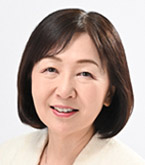
In recent years, human capital management has been gaining increasing attention. Professor Toshiko Suda has published a new book, "Insights from 40 Years of SHRM Research: How to Achieve HR-Driven Human Capital Management," which presents methodologies for analyzing and building human capital based on Strategic Human Resource Management (SHRM) research.
Human capital management proposed by Japan’s Ministry of Economy, Trade and Industry (METI) originates from finance and accounting perspectives and is not grounded in academic research. On the other hand, the ideas reflected in human capital management have long been studied in the fields of organizational behavior and human resource management. This book aims to bridge this gap by focusing on SHRM within these academic fields and proposing concrete measures for realizing human capital management.
The book begins with two early SHRM models—the Michigan Model and the Harvard Model—published in 1984, and points out that employees are simultaneously “valuable assets/capital” and “costs,” defining the former as the soft version and the latter as the hard version. It then introduces SHRM research conducted in the UK that has influenced subsequent scholarship.
Long-term SHRM research has already demonstrated that human resource management improves human capital and organizational performance, and specific measures have been proposed. This book is filled with the results of SHRM research and concrete strategies for implementing human capital management, and is expected to contribute significantly to advancing human capital management practices.