2026.04.27
Overseas Study SeminarⅡ:"Taking That First Step Opens Up the World—What the Malaysia Study Program Taught Me"
Hitomi Ito (Evening Course, Enrolled in 2025)
In the summer of my first year at ABS, after settling into the rhythm of classes, I participated in the Malaysia study program from August 17 to 24, 2025. I had hesitated to apply because I wasn't very confident in my English, but Professor Ichino's words pushed me forward: "What matters most is what you feel and think when you're there. Language comes second. The desire to go is what counts. Just take that first step." I hope this report conveys the value of this program and serves as encouragement for anyone who, like me, might be hesitating to take the leap.
[Experiences Unique to the Malaysia Study Program]
The true value of this program lies in gaining official access to universities, government agencies,
and companies that would be impossible to visit as an individual traveler. We attended lectures on
Islamic culture, Islamic marketing, and Islamic finance at the University of Malaya and Universiti
Sains Islam Malaysia (USIM). We also learned about practical operations at Bank Islam Malaysia (an
Islamic bank) and JAKIM, the government halal certification authority. Additionally, we toured the
manufacturing facilities of Pharmaniaga (pharmaceuticals) and Hajah Aminah Food Industries Sdn. Bhd.
(food products), witnessing firsthand how halal management—the strict separation and control of what
is permissible under Islamic law from what is prohibited—is practiced on the ground. At WAOJE (World
Association of Overseas Japanese Entrepreneurs), we had direct exchanges with Japanese entrepreneurs
thriving abroad, experiencing the realworld business landscape up close.
[Three Key Learnings from the Program]
Here are three particularly impactful takeaways from my time in Malaysia.
Learning #1: Halal Certification—An "Infrastructure of Trust" Connecting
Consumers and Businesses
Through lectures at JAKIM and a tour of a halal-certified food factory, I was struck by the rigor of
their management systems. From comprehensive traceability of raw materials and separation of
production lines to prevent cross-contamination, to regular audits—this went far beyond quality
control. It was an "infrastructure of trust" grounded in religious conviction. Halal certification
is not merely a religious requirement; its stringent standards make it an essential "seal of trust"
for doing business in the vast Islamic market.
Learning #2: Islamic Finance—A Partnership-Based Financial Model Built
on Shared Risk and Profit
At USIM, we explored Islamic finance through a board game called "MIG." Although I didn't complete a
contract myself, observing my peers' successful negotiations gave me a bird'seye view of the entire
process. What struck me most was the moment when participants placed their hands on the text of
Sharia (Islamic law) and pledged to conditions with full transparency on cost and profit. This
experience gave me an intuitive understanding that Islamic finance is not about making money through
interest, but about sharing risks and returns in a true partnership.
Learning #3: The Entrepreneurial Spirit Abroad—Lessons from
Entrepreneurs
Our interaction with Japanese entrepreneurs at WAOJE was nothing short of inspiring. Many of them,
including ABS alumnae, are running businesses in Malaysia. Their stories weren't just about
success—they were filled with real struggles navigating cultural differences and unfamiliar business
practices. Witnessing the tremendous energy it takes to forge a path in a foreign environment, I
gained a firsthand appreciation for both the toughness of creating a business in a global context
and the resilience required to overcome it.
[Experiencing Malaysia with All Five Senses]
The program wasn't just about acquiring knowledge. One scene that remains vivid in my memory is the
campus of USIM. For Muslims, the five daily prayers are central to life. When prayer time comes, the
adhan (call to prayer) echoes across campus like music. Then, people quietly make their way across
the green lawn toward the mosque at the heart of the campus. That peaceful scene showed me how
deeply and naturally faith is woven into their daily lives. Experiencing a different culture through
all five senses and engaging with values rooted in people's everyday lives—this is another
invaluable aspect of the program that no textbook can provide.
[Reflecting on the Experience]
Finally, I want to address my biggest fear: the language barrier. There were moments during
technical lectures when I couldn't keep up, and I relied heavily on smartphone translation apps. But
my greatest source of support was the presence of my peers. Whenever I was struggling, they
immediately noticed and helped me with translations and explanations. This experience taught me that
more than perfect language skills, what matters most is the desire to learn and the support of those
around you.
This experience was a perfect opportunity to test how the knowledge I gained at ABS can be applied in a different cultural context. More importantly, it made me realize how narrow my own perspective had been — what I thought was common sense was anything but universal.
If you want to deepen your learning at ABS and make it more real, if you want to break out of your shell even just a little — start by attending an information session and see for yourself what this program has to offer. The world beyond the classroom is waiting with discoveries that will surely exceed your imagination.
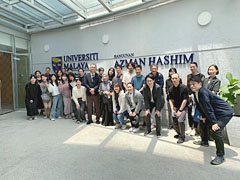
Group photo at University of Malaya
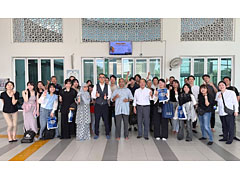
Group photo at Universiti Sains Islam Malaysia
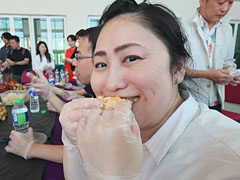
Durian Party at Universiti Sains Islam Malaysia